
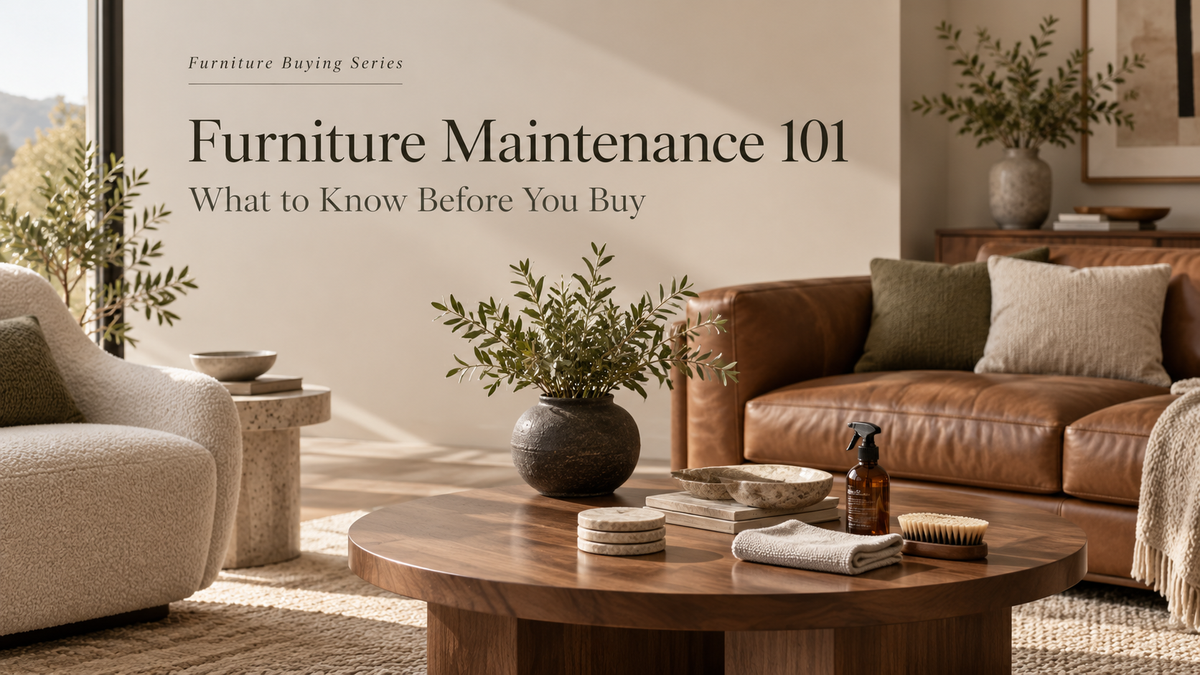
Your sofa can look immaculate under showroom lighting but considerably less impressive after a few years of direct afternoon sun, takeout dinners, pets, and everyday use. In many cases, the difference between furniture that ages gracefully and furniture that looks prematurely worn comes down to choosing the right material in the first place and caring for it properly.
At Leisure Space, we carry furniture for apartments, condos, townhomes, and family homes across a wide range of materials and styles, from upholstered seating and leather sofas to wood dining furniture and mattresses.
Before buying a piece because you like the color or silhouette, it is worth asking a less glamorous question:
How Much Maintenance Does Furniture Actually Need?
Not as much as you'd imagine. The most important trick is consistency. Across most furniture categories, a few habits do much of the work: remove dust before it accumulates, deal with spills quickly, keep furniture away from excessive heat and moisture, avoid prolonged direct sunlight, and periodically inspect hardware or fittings.
Furniture rarely deteriorates because someone forgot to polish it one Saturday. Problems tend to develop gradually through repeated exposure to sunlight, accumulated dirt, moisture, overloaded storage, or cleaners that were never intended for the material That is why maintenance should begin with prevention rather than repair.
Is Upholstered Furniture Difficult to Keep Clean?
Not necessarily. Regular vacuuming with a soft brush attachment helps keep dirt from becoming embedded in the fabric of upholstered furniture. When spills occur, they should be addressed promptly and gently rather than saturated with cleaner.
Avoid harsh solvents, bleach, or aggressive cleaning products unless the manufacturer specifically recommends them. Different fabrics can have different cleaning codes and treatments, so the care instructions for the specific product should always come first.
This is one reason maintenance belongs in the buying conversation. If you have young children, pets, or a sofa that doubles as the dining table during movie night, the prettiest fabric in the room may not be the most sensible one.
Is Leather Easier to Maintain Than Fabric?
Leather can be straightforward to care for, but “easy” should not be confused with “maintenance-free." Dust can generally be removed with a soft, dry cloth, while deeper cleaning should be done with an appropriate leather cleaner rather than a general household product. Heat and direct sunlight are particularly important considerations because they can dry and fade leather over time. Periodic conditioning may also help leather remain supple, depending on the product.
Faux leather has somewhat different requirements. A soft damp cloth and mild soap solution may be appropriate for routine cleaning, while harsh chemicals and solvents should be avoided. It should also be protected from excessive heat and sunlight, which can contribute to cracking or fading.
The larger buying lesson is simple: do not choose between fabric, leather, and faux leather based entirely on appearance. Choose based on the amount of cleaning, conditioning, sunlight exposure, and everyday use the piece is likely to encounter.
What Is the Best Way to Care for Wood Furniture?
Wood benefits from a relatively stable environment. Extreme swings in temperature and humidity can cause wood to move, warp, or crack, so placing a wood table directly beside a heater or in a persistently damp environment is rarely ideal.
Use products that are appropriate for the specific finish, and lift objects rather than dragging them across the surface. Coasters, placemats, felt pads, and trivets are not exciting purchases, but they are often more effective than trying to repair scratches, heat marks, or water rings later.
For buyers, finish also matters. A highly polished surface may show fingerprints and fine scratches more readily than a textured or matte finish. That does not make one objectively better; it simply changes what normal wear will look like.
How Should You Maintain a Mattress?
Mattresses are easy to neglect because most of the product is hidden beneath sheets, but basic care can make a meaningful difference in hygiene and even wear.
A washable mattress protector creates a barrier against spills, stains, dust, and other contaminants. Additionally, periodic rotation may help promote more even wear, depending on the mattress design. Removable covers should only be washed when the manufacturer specifically allows it, since removing some covers may damage the mattress or affect warranty coverage. For spot cleaning, less moisture is generally better than soaking the surface. Vacuuming can also help remove surface debris.
The most important rule is to follow the manufacturer’s instructions for the particular mattress. Foam construction, covers, fire barriers, and warranty conditions can differ substantially from one model to another.
Does Sunlight Really Damage Furniture?
Yes, and Southern California makes this question especially relevant.
Extended exposure to direct sunlight can fade fabrics, alter wood finishes, and dry out both leather and faux leather. A room with large west-facing windows may therefore demand more thought than one with mostly indirect light. In other words, window treatments, furniture placement, and periodically adjusting exposed cushions can all reduce uneven fading.
When planning a room, consider where the strongest sunlight lands during the afternoon, not just where the furniture looks best when you first arrange it.
What Should You Check Before Buying Furniture?
You should look at the material, the manufacturer’s care instructions, and where the piece will live. Consider whether it will receive direct sunlight, whether pets will regularly use it, whether food and drinks will be nearby, and whether the finish is appropriate for the amount of daily traffic the furniture will receive.
It is also worth thinking about construction and hardware. Periodically checking furniture for loose screws and fittings can help address small issues before they become larger structural problems.
Maintenance becomes much easier when you make a few decisions before checkout.
Should You Buy Furniture Based on Maintenance?
Yes, how easy it is for you to maintain your future should definitely be one of the deciding factors when you shop.
The best furniture is not simply the piece that looks best on delivery day. It is the one that still works for your household once normal life begins. Someone furnishing a quiet formal room can make different choices from someone buying a sofa for a one-bedroom apartment with a dog, two roommates, and no dedicated dining table.
Care instructions should never be treated as an afterthought. They are effectively the owner’s manual for the material you just bought.
Good Furniture Care Starts Before the Furniture Arrives
The easiest furniture to maintain is furniture selected with its future environment in mind.
Choose materials that suit your household. Measure where sunlight falls. Keep harsh cleaners away from surfaces they were not designed for. Address spills before they settle and pay attention to small signs of wear rather than waiting for them to become repairs.
A little maintenance will not make furniture indestructible, nor should it. Furniture is meant to be lived with.
The goal is simply to make sure everyday use becomes character rather than premature damage.

Leave a comment
All comments are moderated before being published.
This site is protected by hCaptcha and the hCaptcha Privacy Policy and Terms of Service apply.